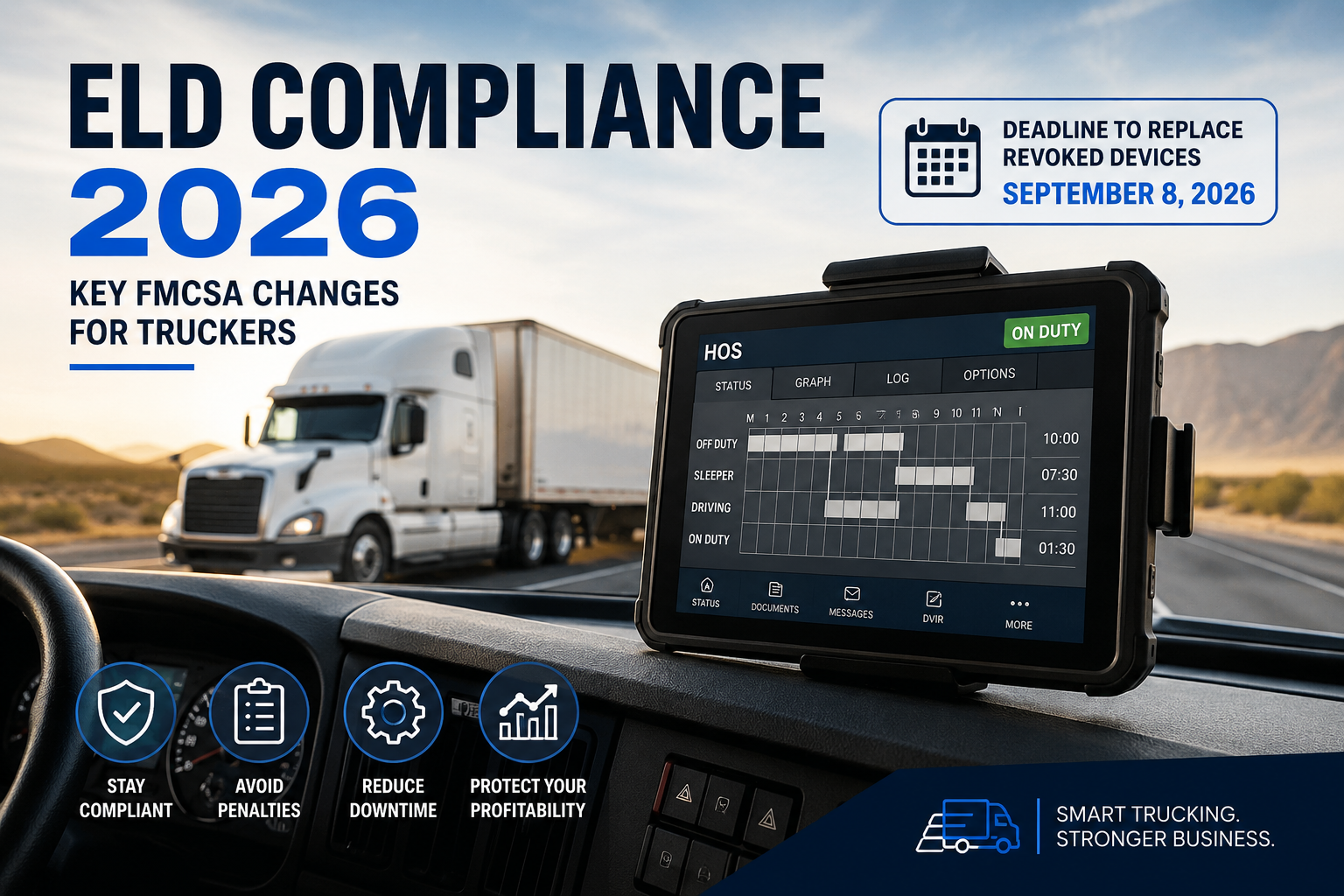
ELD Compliance 2026: Key FMCSA Changes for Truckers
ELD Compliance 2026: What Truckers Need to Know
The trucking industry is facing another important compliance development in 2026. ELD compliance 2026 has become especially relevant as the Federal Motor Carrier Safety Administration (FMCSA) continues reviewing electronic logging devices and removing devices that do not meet federal requirements.
For owner-operators and fleet managers, an ELD is more than a device in the cab. It is part of daily operations, hours-of-service recordkeeping, and overall compliance. A change in ELD requirements can also create additional business expenses, making it important to understand how compliance affects your trucking costs.
What Is ELD Compliance?
Electronic Logging Devices, commonly called ELDs, automatically record information related to a commercial driver's hours of service. They are designed to make records of driving and duty status more accurate and easier to manage.
ELD compliance means using a device that meets the applicable FMCSA requirements and maintaining accurate electronic records.
For trucking companies, compliance also means keeping track of the status of the device being used. An ELD that was previously registered may later be removed from FMCSA's registered list if it no longer meets the required standards.
Why ELD Compliance 2026 Is Important
FMCSA has been taking active enforcement action against ELDs that fail to meet federal requirements.
On July 9, 2026, FMCSA removed 10 ELDs from its registered list. The affected devices included Ontime Logs iosix, LAST MINUTE ELD, Porter ELD, Zee HOS Compliance, EV ELD IOSIX, Light and Travel ELD, PREMIERRIDE LOGS, 2BRO ELD, 305 ELD, and TT ELD 40. Carriers using these devices were given until September 8, 2026, to replace them with compliant registered ELDs.
This is an important reminder for truckers: simply having an ELD installed does not automatically mean the device remains compliant.
What Should Truckers Do Before September 8, 2026?
If your truck uses one of the ELDs affected by the July 2026 FMCSA action, checking the device status should be a priority.
Here are some practical steps:
1. Identify Your ELD
Check the manufacturer, device name, model number, and ELD identifier currently being used in your truck.
2. Check the FMCSA Registered List
Compare your device with the official FMCSA Registered Devices List. FMCSA provides the current list of devices that have been registered and self-certified by their providers.
3. Look for a Revocation Notice
FMCSA regularly publishes updates when devices are removed from its registered list. These notices explain the affected devices and the applicable replacement period.
4. Replace a Revoked Device
If your ELD has been revoked, arrange for a compliant replacement rather than waiting until the deadline.
5. Update Your Business Costs
A new ELD may involve hardware, installation, subscription, connectivity, or other expenses. Add these costs to your trucking budget.
How ELD Changes Can Affect Trucking Costs
Compliance expenses may seem small compared with fuel or truck payments, but several smaller expenses can have a noticeable effect on profitability.
For example, suppose an owner-operator has $7,500 in monthly operating expenses and drives 10,000 miles.
The operating cost would be:
$7,500 ÷ 10,000 = $0.75 per mile
Now imagine that new technology and compliance expenses add $250 per month.
The updated calculation becomes:
$7,750 ÷ 10,000 = $0.775 per mile
That is an increase of 2.5 cents per mile.
For a truck covering thousands of miles every month, even a small change in cost per mile can affect the amount left over from each load.
Why Cost Per Mile Matters for Owner-Operators
Knowing your cost per mile helps you understand how much it actually costs to keep your truck moving.
Your calculation can include expenses such as:
Fuel
Truck payments
Insurance
Maintenance
Tires
Permits
Tolls
Parking
ELD and technology costs
Other operating expenses
The basic calculation is:
Total Operating Costs ÷ Total Miles = Cost Per Mile
Once you know this figure, you can compare it with your revenue per mile and get a clearer picture of your potential profit.
For example:
Revenue per mile − Cost per mile = Profit per mile
This is especially useful when freight rates change or when new operating expenses are introduced.
A Compliance Change You Should Also Know
ELD rules are not only changing through device enforcement.
In 2026, FMCSA also finalized a rule removing the requirement for carriers to keep a physical copy of the ELD operator's manual inside a commercial motor vehicle. Drivers still need to understand how to operate the ELD and provide required information during inspections.
This change reduces one paperwork requirement, but it does not remove the responsibility to use the ELD correctly.
How Truckers Can Stay Ahead
Keeping up with ELD compliance 2026 does not have to be complicated.
A simple monthly compliance check can help:
Confirm your ELD is still registered.
Check for recent FMCSA announcements.
Review your device and software updates.
Keep required records accurate.
Monitor new compliance-related expenses.
Recalculate your cost per mile when expenses change.
Taking these steps can reduce the chance of discovering a compliance problem at the worst possible time.
How FreeTruckCalc Can Help
Compliance is only one part of running a profitable trucking operation. Once an additional expense is added to your business, it is useful to understand how that expense affects your overall numbers.
FreeTruckCalc helps truckers estimate important operating figures such as cost per mile, fuel expenses, trip costs, and profitability.
Adding updated expenses to your calculations can give you a more realistic view of what each mile costs and what rate you need to remain profitable.
Final Thoughts
ELD compliance 2026 is an important issue for U.S. truckers as FMCSA continues to remove devices that fail to meet federal requirements.
The July 2026 removal of 10 ELDs and the September 8 replacement deadline show why owner-operators and fleet managers should regularly verify their equipment instead of assuming that an existing device will remain registered.
Staying compliant protects your operation, but tracking the financial impact of compliance is equally important. When equipment, subscriptions, or other business expenses change, update your cost-per-mile calculations as well.
A better understanding of your real operating costs can help you evaluate loads more accurately, set realistic rate targets, and protect your profit margin.
Always check the latest FMCSA guidance and official registered ELD list for current regulatory requirements.